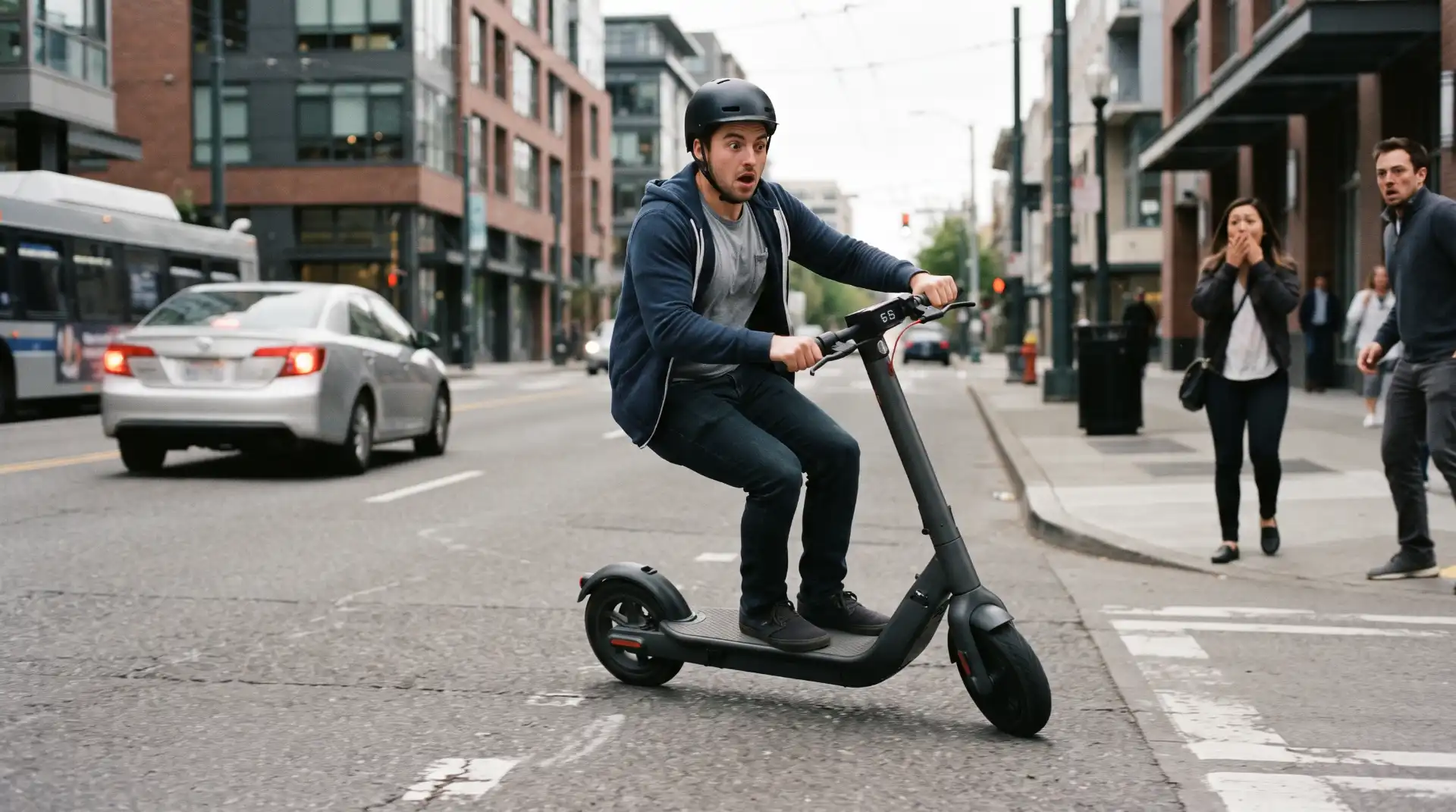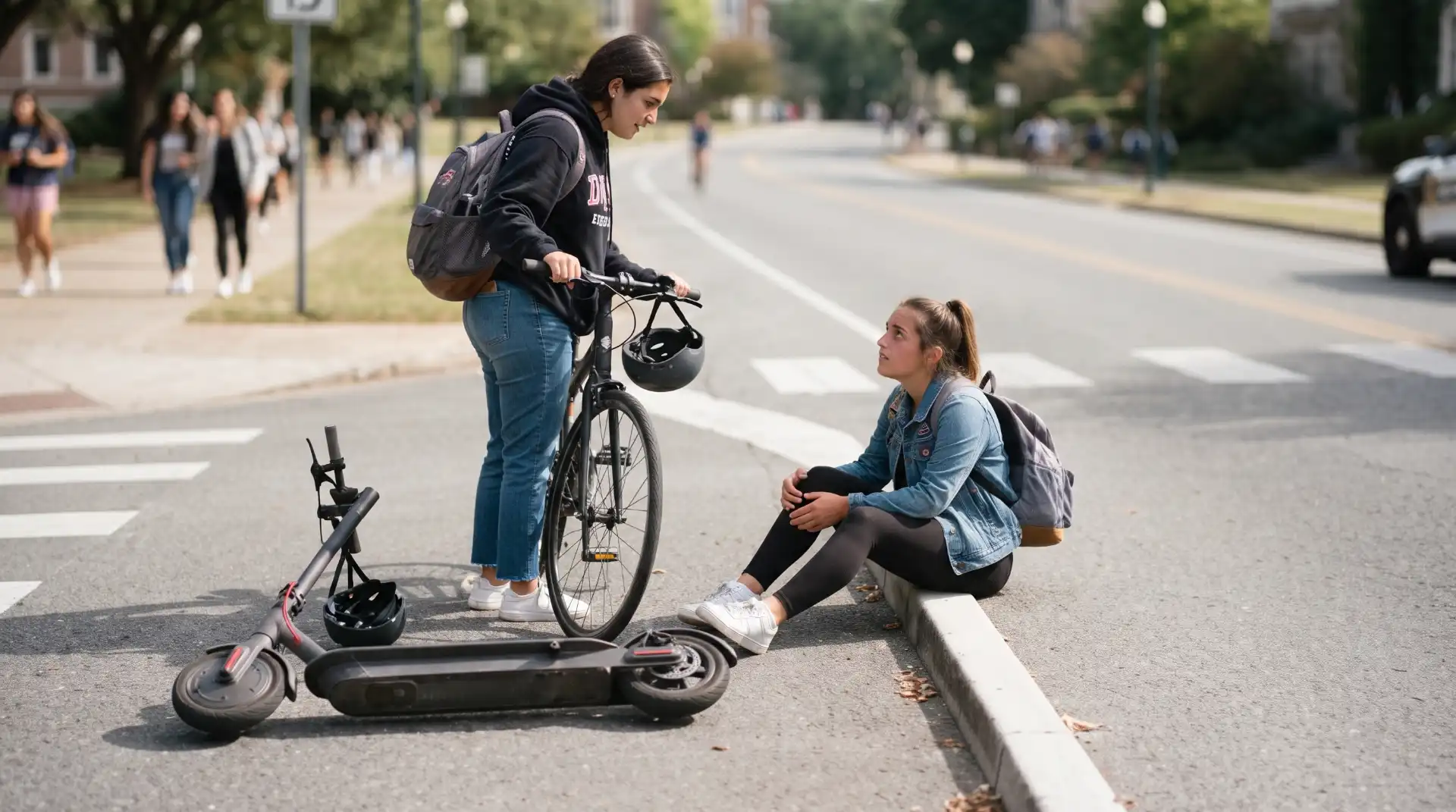
Electric scooters have become a common part of transportation in many U.S. cities. Shared scooter services allow users to locate a scooter through a smartphone app, unlock it, ride for a short distance, and leave it near their destination. This flexibility can make short urban trips easier, but it can also create problems when riders leave scooters in places meant for pedestrians.
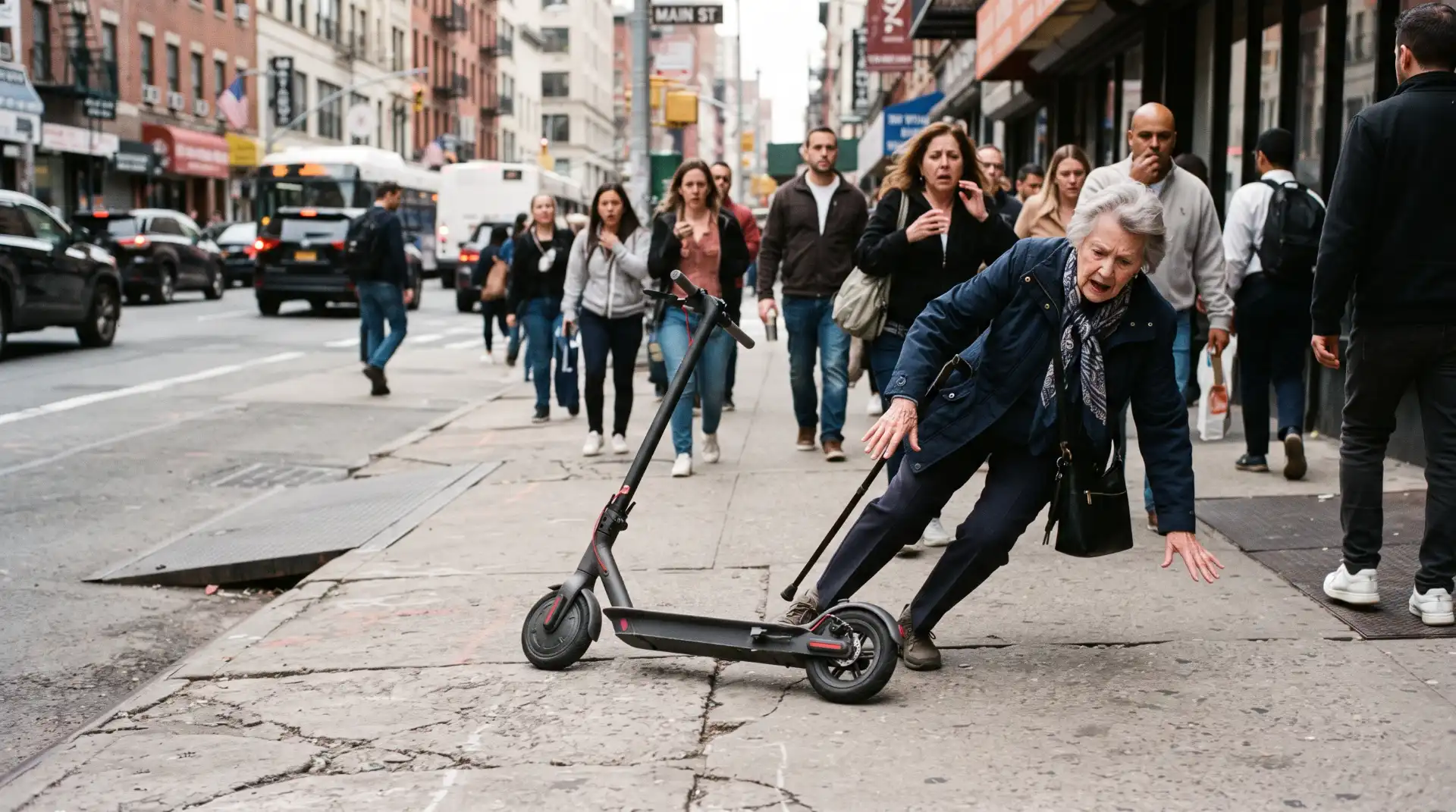
A scooter parked across a sidewalk, curb ramp, crosswalk entrance, building doorway, or transit stop may become a serious obstruction. A pedestrian may trip over the scooter, lose balance while moving around it, or step into the roadway to avoid the blocked path. Older adults, people with disabilities, children, tourists, and parents using strollers may face even greater risks.
A parked rental scooter pedestrian injury can raise complicated questions about responsibility. Depending on the circumstances, liability may involve the person who parked the scooter, the rental company, a property owner, a business, or a government agency responsible for the public walkway.
Understanding these accidents requires looking beyond the scooter itself. The location of the device, the condition of the sidewalk, local parking rules, available digital records, surveillance footage, and prior complaints may all affect a pedestrian injury claim.
Why Improperly Parked Rental Scooters Create Safety Problems
Most rental scooters use a dockless system. Unlike traditional bike-share programs that require users to return bicycles to fixed stations, dockless scooters may often be left within approved operating areas after the trip ends.
This system depends heavily on responsible parking.
A rider may be instructed to leave the scooter upright near the curb, within a designated parking zone, or in an area that does not interfere with pedestrian movement. Despite these rules, scooters may still appear in the middle of sidewalks, near entrances, across curb ramps, or beside busy intersections.
The problem becomes more significant when pedestrian space is already limited.
Older city sidewalks may be narrow. Outdoor restaurant seating, signs, trees, utility poles, construction barriers, trash bins, street furniture, and parked scooters can further reduce the space available for walking.
A scooter that occupies only part of the sidewalk may still create a dangerous condition if pedestrians cannot pass comfortably.
Poor lighting may increase the danger at night. Scooter decks are low to the ground and may be difficult to see in shadows. A dark-colored scooter lying on pavement may blend into the surroundings.
Crowded sidewalks create another problem. A person walking behind other pedestrians may not see a scooter until the last moment. Someone carrying bags, pushing a stroller, or assisting a child may also have limited ability to react quickly.
These conditions can turn a transportation device into a significant sidewalk hazard.
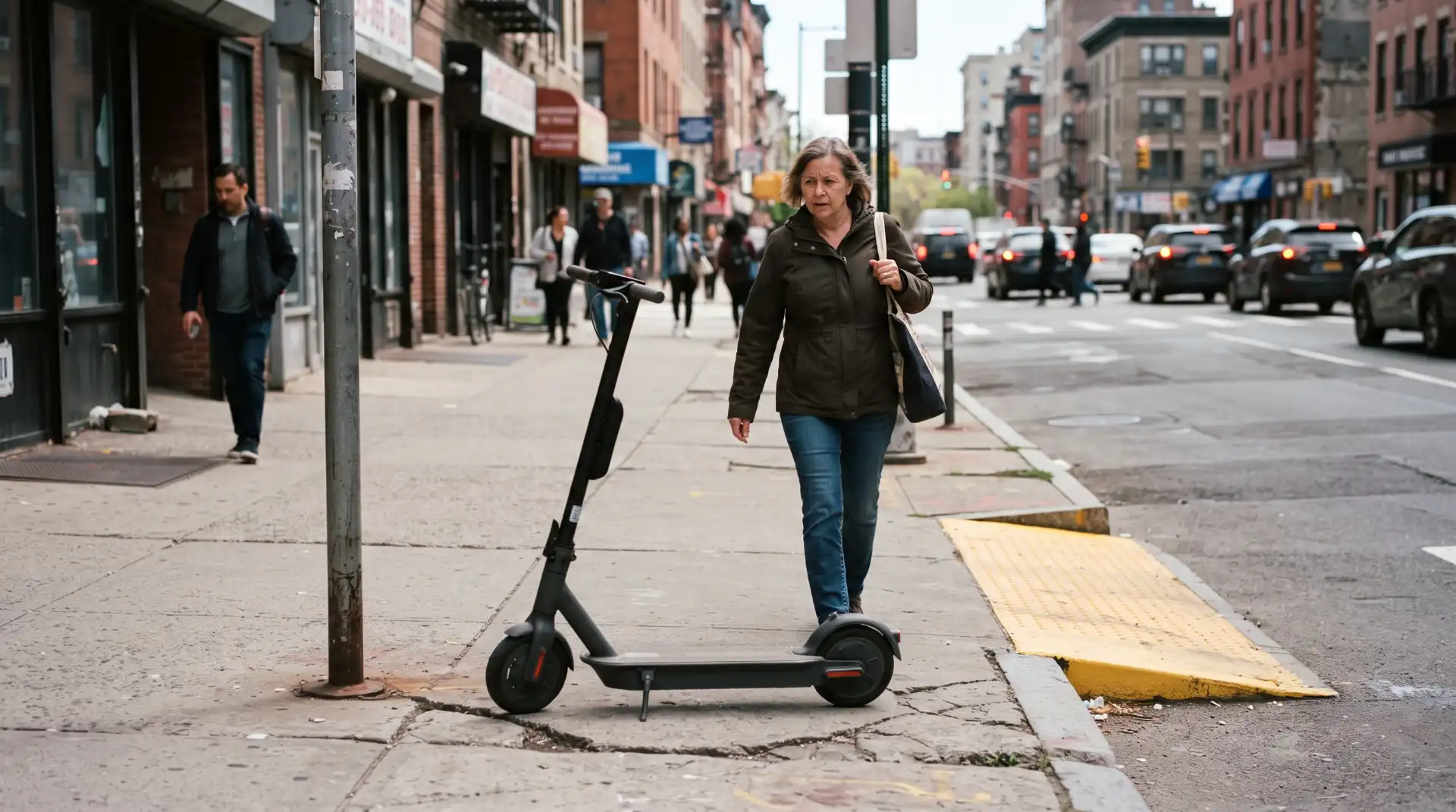
Common Locations Where Scooter Parking Hazards Occur
Improper scooter parking can happen almost anywhere shared scooters operate, but certain locations create greater risks.
Downtown entertainment areas are one example. Riders frequently use scooters to travel between restaurants, hotels, bars, theaters, and event venues. High pedestrian traffic can combine with large numbers of scooters at the end of an evening.
Transit areas also create problems. Scooters may be left near bus stops, rail stations, or rideshare pickup areas because riders use them to complete the final portion of a trip. These locations already have high foot traffic.
Tourist areas may experience similar congestion. Visitors unfamiliar with local scooter rules may park devices wherever their ride ends.
Curb ramps are especially sensitive locations. These ramps allow wheelchair users, people with walkers, parents pushing strollers, and other pedestrians to move between the sidewalk and roadway.
A scooter placed across a curb ramp may completely prevent access.
Building entrances are another common problem. A scooter parked near a doorway may narrow the path available for customers or residents entering and leaving the property.
Other problem locations include parking garage entrances, crosswalk approaches, driveways, school zones, hospital areas, shopping districts, apartment buildings, college campuses, and construction zones.
Common Types of Pedestrian Scooter Injuries
Pedestrian injuries involving parked scooters often occur through falls.
A person may catch a shoe on the scooter deck, strike the front wheel, or trip over the scooter’s stem. The sudden loss of balance can cause the pedestrian to fall forward or sideways onto hard pavement.
Wrist and hand injuries are common because people often extend their arms to break a fall.
Shoulder injuries may occur when the force of the fall travels through the arm. A person may suffer a sprain, dislocation, fracture, or soft tissue injury.
Knee and ankle injuries may happen if the pedestrian twists while falling.
Facial injuries can occur when someone falls directly onto concrete. These injuries may include cuts, dental trauma, bruising, or fractures.
Head injuries may also happen. A pedestrian does not need to lose consciousness to suffer a concussion or other traumatic brain injury.
Older adults may be particularly vulnerable to hip fractures. A fall that causes relatively minor injuries in a younger person may have much more serious consequences for someone with limited mobility or fragile bones.
Back and neck injuries can also result from the sudden twisting motion associated with a fall.
Some injuries may not become fully apparent immediately. Pain, swelling, stiffness, dizziness, and headaches may develop hours later.
Why Older Adults May Face Greater Risks
Sidewalk obstructions can be especially dangerous for older pedestrians.
Balance, reaction speed, vision, and mobility may change with age. An older pedestrian who encounters a scooter unexpectedly may have less time to adjust their path.
A fall may also have more serious consequences.
Hip fractures can require surgery, hospitalization, rehabilitation, and assistance with everyday activities. Even after treatment, some older adults may experience reduced mobility.
Fear of another fall may also affect daily routines. A pedestrian may avoid certain streets, reduce physical activity, or need assistance when walking outdoors.
For these reasons, scooter parking policies that protect pedestrian space can have particular importance in areas with senior housing, medical facilities, community centers, or high numbers of older residents.
Accessibility Concerns for People With Disabilities
Improperly parked scooters can create significant accessibility issues.
People who use wheelchairs generally need sufficient sidewalk width to travel safely. A scooter blocking part of the walkway may leave too little space.
Someone using a walker may face similar difficulty.
People with visual impairments may have an even harder time detecting scooters. A cane may strike the scooter only moments before the person’s body reaches the obstacle.
Scooters lying flat on the pavement can be particularly difficult to identify.
Curb ramps are another major concern. Blocking these areas may prevent wheelchair users from reaching the street crossing at all.
Federal accessibility standards emphasize the importance of usable pedestrian routes. Readers who want general information about accessibility requirements can review materials from the U.S. Department of Justice at ADA.gov.
Accessibility can also become an important part of the factual investigation after an accident. The question may not simply be whether a scooter was present. Investigators may examine whether the placement interfered with a route intended for accessible pedestrian use.
Can the Rider Who Parked the Scooter Be Responsible?
The rider who left the scooter may be one of the first parties considered after an accident.
Rental scooter companies commonly provide parking instructions through their apps. Users may be told to keep sidewalks clear, avoid curb ramps, park upright, and use designated parking areas when available.
A rider who ignores these instructions may create a foreseeable hazard.
For example, imagine a rider leaves a scooter lying horizontally across a narrow sidewalk. A pedestrian encounters the scooter several minutes later, trips, and breaks a wrist.
The rider’s conduct may become part of a negligence claim.
However, identifying the rider may require digital information from the scooter company. Shared scooters often have individual identification numbers, GPS systems, and app records connected to specific trips.
Those records may help establish when a ride ended and where the scooter was parked.
The availability of this information may depend on company policies, data retention practices, and the legal process used to request records.
Can the Rental Scooter Company Be Liable?
Rental scooter companies may also face questions about responsibility.
Companies generally establish the systems that govern scooter use. They control the app, device maintenance, rider instructions, parking requirements, GPS technology, and enforcement procedures.
The existence of these systems does not automatically make a company responsible for every improperly parked scooter.
However, company practices may become relevant if unsafe parking is a recurring problem.
For example, investigators may ask whether the company had received repeated complaints about scooters blocking a particular area.
They may examine whether the company required riders to photograph the scooter at the end of each trip.
They may also consider whether the company used GPS parking controls, designated parking zones, account penalties, or staff responsible for relocating improperly parked devices.
Another issue may involve how quickly the company responds after receiving a report about a dangerous scooter.
Suppose several people report a scooter blocking a curb ramp, but the device remains there for hours. If an injury occurs later, the response history may become relevant.
These cases depend heavily on the specific facts.
GPS and Geofencing in Scooter Parking
Modern scooter programs increasingly use location technology to control parking.
Geofencing allows a company to create digital boundaries within its app. A scooter may recognize whether it is inside or outside an approved zone.
Some programs may prevent users from ending a trip in prohibited areas. Others may display warnings or require additional steps before the ride can be completed.
GPS data can also help companies identify clusters of scooters or devices left in unexpected places.
However, technology has limitations.
Tall buildings may interfere with location accuracy. A scooter that appears to be properly parked according to GPS coordinates may actually be several feet away.
That difference can matter when a curb ramp or narrow pedestrian path is involved.
For this reason, some operators combine GPS data with end-of-trip photographs.
These photographs may become useful evidence after an accident because they can show where the rider originally left the scooter.
Could a Property Owner or Business Be Responsible?
Liability may sometimes extend beyond the rider and scooter company.
Businesses and property owners often have responsibilities related to areas under their control.
Suppose rental scooters repeatedly accumulate outside a shopping center entrance. Store employees know customers regularly move the scooters aside, but the obstruction continues every day.
If someone later trips over one of the scooters, questions may arise about whether the property owner or business knew about the recurring hazard.
The analysis may depend on whether the sidewalk is public property, private property, or part of a shared commercial area.
Control is often important.
A business may have less responsibility for a scooter placed on a public sidewalk it does not control. In other circumstances, the scooter may be sitting on private property where the business has greater authority to remove hazards.
The facts surrounding ownership and control should be examined carefully.
Can a City Be Involved in a Scooter Injury Claim?
Cities often regulate shared scooter programs through permits, operating rules, parking requirements, and contracts.
Municipal governments may decide where scooters can operate, where they may be parked, and whether companies must provide designated parking areas.
This can make government agencies relevant in some cases.
However, claims involving cities or other public agencies can be more complicated than claims against private parties.
Government entities may have special notice requirements and shorter filing deadlines.
A pedestrian injured on a public sidewalk may also need to distinguish between a hazard created by the scooter and a dangerous condition caused by the sidewalk itself.
For example, a person may trip while moving around a scooter because the remaining walking space contains broken pavement.
The scooter and roadway condition could both be relevant.
Sidewalk Design Can Affect Scooter Accidents
Not every scooter obstruction occurs on a wide, modern sidewalk.
Some older neighborhoods have narrow pedestrian routes that leave little room for obstacles.
Tree roots may raise sections of pavement. Utility boxes may occupy part of the walkway. Restaurant tables, street signs, benches, bicycles, and scooters may reduce usable space even further.
A scooter parked near one of these features may create an especially difficult passage.
The physical design of the area may therefore become part of an investigation.
Photographs showing the entire sidewalk are often more useful than close-up images of the scooter alone.
Wide-angle images may reveal the amount of available walking space, nearby curb ramps, crosswalks, lighting, and other obstructions.

Evidence After a Parked Scooter Accident
Evidence can become extremely important because scooters are easy to move.
A device that caused an accident may be relocated within minutes.
Another rider may unlock it and leave. A pedestrian may move it out of the way. A company worker may collect it. A business employee may place it near the curb.
Once the scooter is moved, proving its original location becomes harder.
Photographs taken shortly after the accident may therefore provide valuable documentation.
A person may photograph the scooter from several angles and include nearby landmarks that establish its exact position.
The scooter’s identification number may also be useful.
Witnesses can provide additional information. Someone working at a nearby store may have seen the scooter sitting in the same location for hours.
Security cameras may also capture the incident.
Businesses, apartment buildings, parking garages, transit facilities, traffic systems, or nearby homes may have video recordings.
These recordings may be overwritten after a limited period, which can make timely preservation important.
Medical Evidence and Treatment Records
A liability claim also requires evidence of the injury itself.
Medical records may show when treatment began, what symptoms were reported, the diagnosis, and what treatment was provided.
Emergency room records may document fractures or head injuries.
Imaging tests such as X-rays, CT scans, or MRIs may provide additional information.
Physical therapy records may show continuing limitations.
A pedestrian may also experience lost income if the injuries interfere with work.
Documentation from an employer, payroll records, or other employment information may help show the financial effect of missed time.
These records help connect the sidewalk accident with the damages claimed later.
Comparative Negligence in Pedestrian Scooter Cases
A scooter company, rider, insurer, or other defendant may argue that the pedestrian shares responsibility.
For example, they may claim the pedestrian was looking at a phone.
They may argue the scooter was obvious and should have been avoided.
They may also claim the person was running, distracted, or walking outside the normal pedestrian path.
Many states use some form of comparative negligence.
Under these systems, more than one person may share responsibility for an accident.
A pedestrian’s conduct does not automatically eliminate a claim.
The analysis usually focuses on what each party did and whether those actions contributed to the injury.
The exact rules vary by state, making jurisdiction important in scooter injury cases.
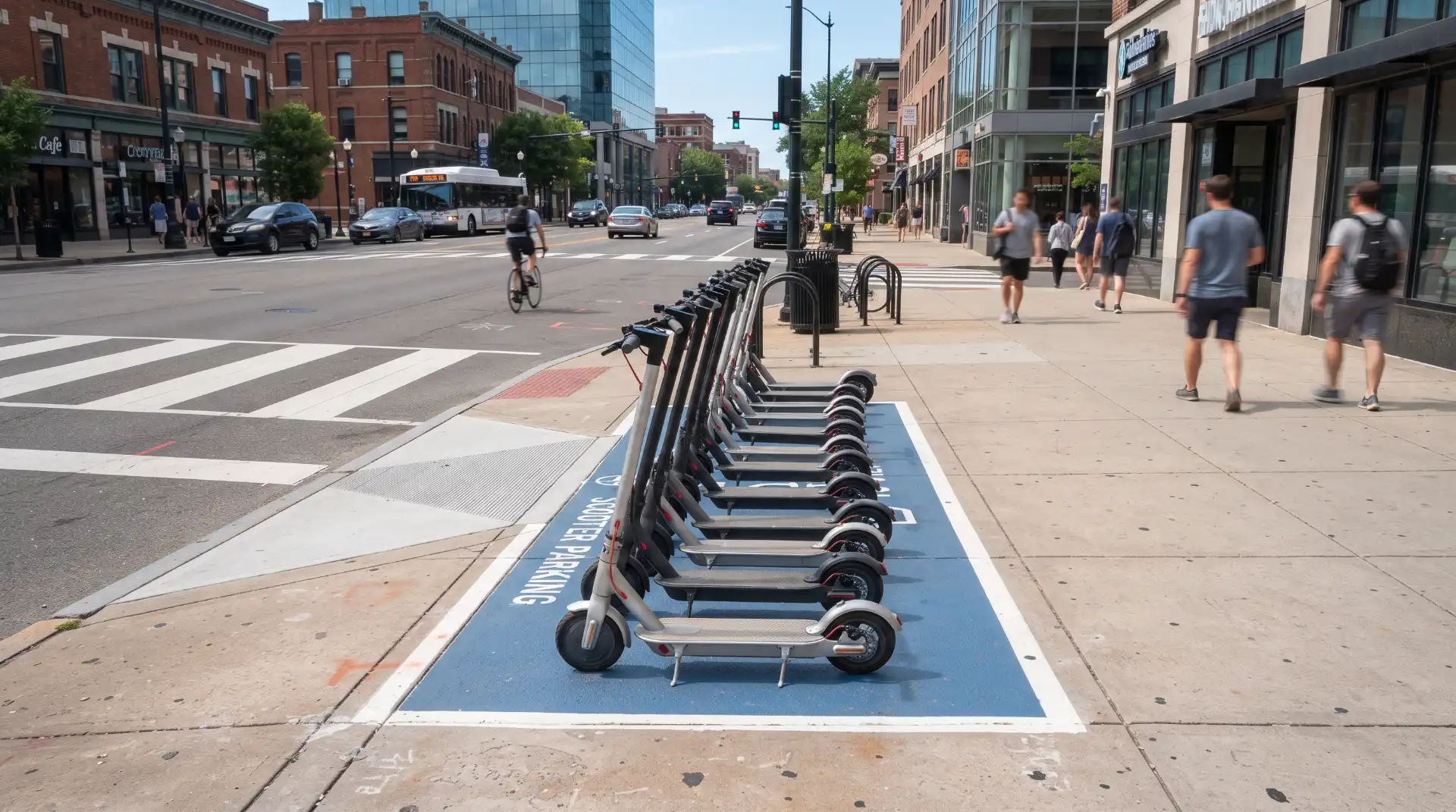
Rental Scooter Parking Rules Vary Across the United States
There is no single nationwide rule governing where every rental scooter may be parked.
Cities and states regulate scooters differently.
Some jurisdictions require scooters to remain near the curb.
Others require designated parking corrals.
Some prohibit parking near curb ramps, building entrances, bus stops, fire hydrants, or crosswalks.
Rental companies may also impose additional rules through their user agreements.
This variation means a pedestrian injury case should consider the specific local regulations that applied at the accident location.
A parking method that complies with one city’s rules may violate another city’s permit requirements.
End-of-Ride Photos May Become Important Evidence
Many shared scooter systems require riders to upload a photograph after parking.
This practice serves several purposes.
It encourages riders to park responsibly.
It gives the company a record of the scooter’s location.
It may also help resolve disputes about whether the device was left in an approved position.
After a pedestrian accident, the photo may become important evidence.
The image could show that the rider left the scooter blocking a walkway.
It could also show that the scooter was originally parked correctly and someone else later moved it.
This distinction can significantly affect liability.
What if Someone Else Moved the Scooter?
Not every dangerous scooter placement is caused by the last rider.
A scooter may originally be parked properly but later moved.
A person may relocate it to make room for a vehicle.
Children may play with it.
Someone may knock it over.
Strong winds, crowds, or another scooter rider may also change its position.
This creates an important factual question.
Who created the hazardous condition?
GPS records, end-of-trip photographs, witness testimony, and surveillance footage may help answer that question.
Without this evidence, determining responsibility may be more difficult.
What Pedestrians May Do After an Accident
The first priority after a fall is medical safety.
If the person has significant pain, bleeding, dizziness, difficulty walking, or possible head trauma, emergency medical care may be appropriate.
Once immediate health concerns are addressed, documentation can help preserve information about the incident.
Photos of the scooter and surrounding sidewalk may be useful.
The scooter identification number may help connect the device to the rental company.
Witness contact information may also be valuable.
If the accident occurred outside a business, the injured pedestrian may report the incident to a manager.
If the scooter belongs to a rental company, the incident may also be reported through the company’s customer support system.
Keeping copies of medical records, receipts, correspondence, and photographs may help create a clear timeline.
Potential Damages in a Pedestrian Scooter Injury Claim
A pedestrian injury claim may involve several types of damages, depending on the facts.
Medical expenses may include emergency transportation, hospital care, physician visits, diagnostic testing, surgery, rehabilitation, physical therapy, medication, and future treatment.
Lost income may apply when injuries prevent the person from working.
More serious injuries may affect future earning ability.
Pain, physical limitations, emotional effects, and changes in daily activities may also become part of the evaluation.
Property damage is less common in pedestrian cases but may apply if items such as a phone, glasses, watch, or other belongings were damaged during the fall.
The available damages depend on state law and the circumstances of the case.
Internal Linking Opportunities
This article can strengthen the site’s existing scooter accident topic cluster through contextual internal links.
In the section discussing responsibility, link naturally to Who’s Liable in a Scooter Accident?
When discussing local regulations and rider parking rules, link to Understanding California’s Scooter Laws where appropriate.
In the evidence section, link to What to Do Immediately After a Scooter Accident.
You can also reference Scooter vs Car Accident Claims when explaining how pedestrian obstruction cases differ from collisions involving moving vehicles.
Internal links should appear naturally within relevant paragraphs rather than being grouped only at the end of the article.
Why Pedestrian Scooter Cases Are Different From Rider Accidents
Most discussions about electric scooter accidents focus on the person riding the scooter.
Pedestrian obstruction claims involve a different type of accident.
The scooter may not be moving at all.
Instead, the legal issue is whether its placement created a dangerous condition.
This can shift the investigation toward parking rules, sidewalk accessibility, property control, company monitoring systems, and the behavior of the person who ended the ride.
The injured pedestrian may never have used a scooter before.
This makes parked scooter accidents an important subject for law firms covering micromobility injuries.
The Growing Role of Designated Scooter Parking
Cities increasingly use designated scooter parking areas to reduce sidewalk clutter.
These may include painted boxes, bicycle racks, dedicated corrals, or specific areas identified inside the rental app.
Concentrating scooters in known locations can keep pedestrian routes more open.
However, designated parking only helps when riders use it and companies enforce the rules.
A city may have dozens of parking areas while problems remain in neighborhoods with limited infrastructure.
Cities also need to consider where corrals are placed.
A poorly designed scooter parking area near a crosswalk or accessible route may create its own problems.
Good parking design should consider both riders and pedestrians.
Scooter Companies and Sidewalk Safety Technology
Technology may play an increasing role in reducing improper parking.
Scooters can collect location information during rides.
Apps can require parking photographs.
Geofencing can restrict where trips end.
Artificial intelligence may also be used to review end-of-trip images and identify scooters blocking sidewalks.
These tools may reduce some hazards, but they do not eliminate human behavior.
Riders can still ignore instructions.
Technology can malfunction.
Location information can be inaccurate.
This means physical sidewalk conditions and real-world enforcement remain important.
Why Parked Scooter Injuries Matter
A scooter lying on a sidewalk may look like a minor urban inconvenience.
For someone who trips over it and suffers a fractured hip, concussion, or serious wrist injury, the consequences can be substantial.
The issue also affects broader questions about transportation policy.
Cities want to provide alternatives to cars while maintaining walkable neighborhoods.
Scooter companies want convenient parking for riders.
Pedestrians need clear and accessible sidewalks.
Balancing these interests requires thoughtful regulation, technology, enforcement, and responsible rider behavior.
Final Thoughts
Rental scooters may remain a common part of urban transportation across the United States, but their convenience should not come at the expense of pedestrian safety.
A scooter left across a sidewalk, curb ramp, doorway, or crosswalk approach may create a dangerous obstruction. Pedestrians can suffer fractures, head injuries, back injuries, and other harm after tripping over or maneuvering around a poorly parked device.
Liability may depend on who placed the scooter there, how long it remained, whether the rental company knew about the problem, whether local parking rules were violated, and who controlled the area where the accident happened.
Evidence such as photographs, surveillance video, scooter identification numbers, app records, end-of-trip images, witness statements, and medical documentation may help clarify those questions.
As cities continue adapting to shared micromobility, parked scooter injuries deserve attention alongside collisions involving moving scooters. Clear sidewalks, accessible curb ramps, effective parking rules, and responsible scooter use can all play a role in reducing pedestrian hazards.