Electric scooters are designed to provide convenient transportation without the size and complexity of a traditional automobile. Riders use them to commute to work, travel around college campuses, connect with public transportation, and make short trips through cities across the United States. As e-scooters become more common, however, questions about their electronic controls and safety systems are becoming increasingly important.
One component that can have a major effect on how an electric scooter operates is its speed-limiting system. A speed limiter, sometimes called a governor or electronic speed restriction, is intended to keep the scooter from exceeding a programmed maximum speed. Depending on the model, speed control may involve software, the motor controller, throttle programming, electronic settings, or a combination of systems.
When a speed limiter does not function properly, the consequences can be serious. A scooter may accelerate beyond the speed a rider reasonably expects, exceed a posted or locally applicable limit, or behave differently from the way the manufacturer designed it to operate. If the rider loses control and suffers injuries, determining responsibility may require an investigation into the scooter’s design, software, maintenance, warnings, rental-company practices, rider conduct, and applicable state law.
The legal question is not automatically whether the rider, manufacturer, rental company, or another party is responsible. In some cases, more than one factor may have contributed to the crash. Understanding how those factors are evaluated can help injured riders and their families understand the issues that may arise after a speed-related scooter accident.
What Is an E-Scooter Speed Limiter?
An electric scooter speed limiter is a system intended to restrict how quickly the scooter can travel. The exact technology varies between manufacturers and models, so there is no single design used on every e-scooter.
Some scooters use electronic controls that communicate with the motor controller. Others may use software settings that determine the maximum permitted speed under particular riding modes. Shared rental scooters can also use app-based systems, geofencing, or fleet-management technology to establish operating limits in specific locations.
The purpose of limiting speed can involve several considerations. A manufacturer may design a particular scooter for a certain operating range, while a city may establish a local maximum speed for shared scooters. A rental company may also configure its fleet to comply with permit requirements or operational policies.
The U.S. Consumer Product Safety Commission advises micromobility users to follow local traffic laws and posted speed limits and to check important scooter components, including brakes, throttle, tires, cables, lights, handlebars, and the frame before riding.
A properly functioning speed-control system is therefore part of a larger safety system. If that system malfunctions, the resulting accident may involve questions that go beyond ordinary rider negligence.
What Happens When a Speed Limiter Fails?
A speed limiter failure does not necessarily mean that a scooter will immediately reach its absolute maximum mechanical speed. The specific effect depends on the design and the nature of the malfunction.
For example, a scooter might gradually exceed its expected speed because an electronic setting is not being applied correctly. Another scooter could experience an unexpected increase in acceleration. A software error might cause a programmed limit to disappear, while a faulty controller could cause the motor to respond differently than expected.
There can also be situations in which the scooter’s speed-control system appears to work under some circumstances but fails under others.
This distinction can become important after an accident. A rider may report that the scooter suddenly accelerated or would not respond normally to throttle input, but determining whether the device actually malfunctioned may require technical evidence.
A rider’s statement is relevant, but it may not be the only evidence available.
Investigators may examine the scooter’s electronic components, controller settings, software version, maintenance records, app data, diagnostic information, photographs, video footage, witness statements, and the physical condition of the device.
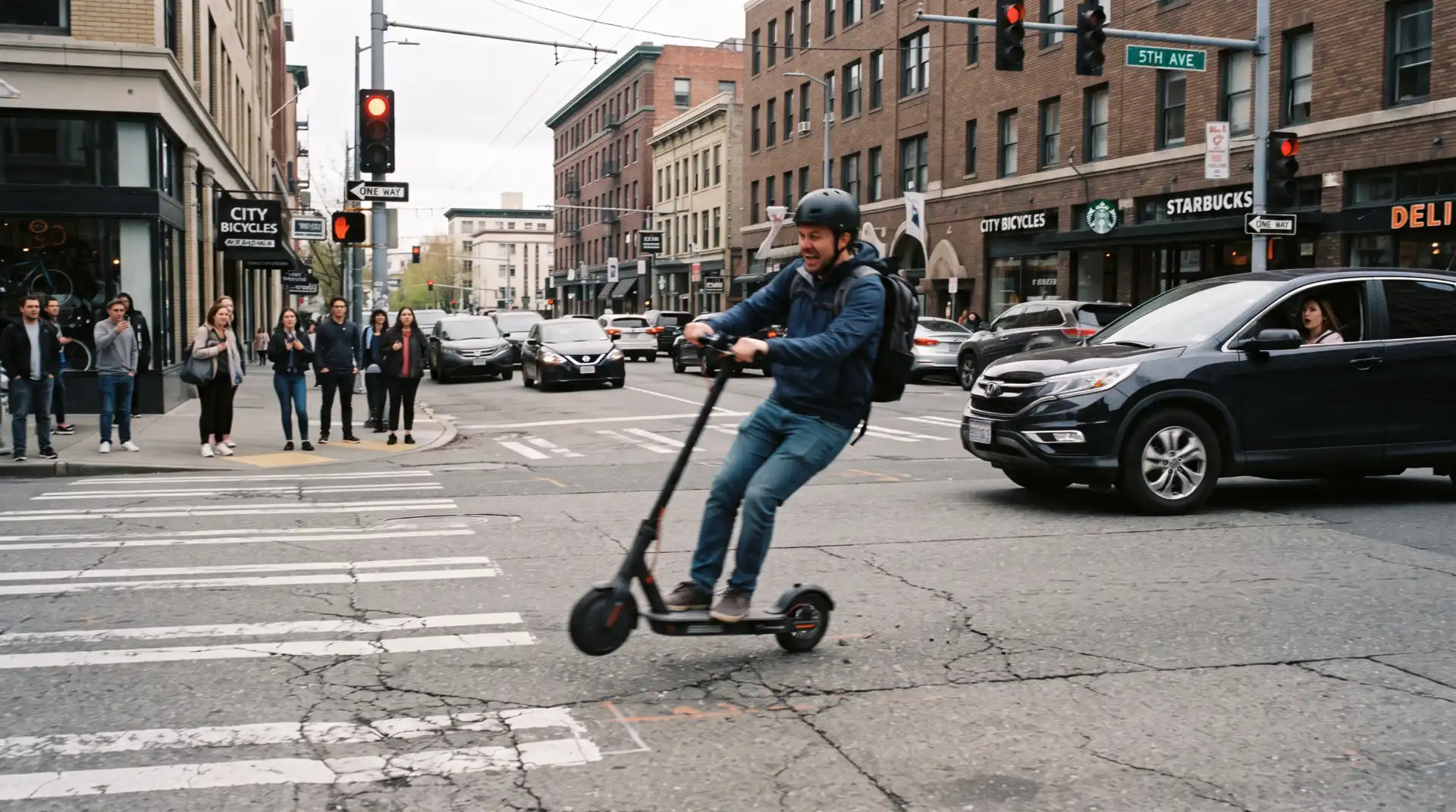
Why Excessive Speed Can Change the Severity of a Crash
Speed is important in scooter accidents because riders have limited physical protection compared with people inside passenger vehicles.
When a scooter travels faster, the rider may have less time to react to an unexpected vehicle, pedestrian, pothole, parked car, bicycle, or other obstacle. A rider who normally expects a scooter to remain within a particular speed range may also be caught off guard when the device suddenly behaves differently.
The CPSC notes that e-scooters are small and can be difficult for drivers and pedestrians to see, while also warning riders to slow down and remain aware of their surroundings.
Research has also examined how different speed-limiter settings affect e-scooter behavior and where riders travel. One study involving observations in Austin, Texas, and Washington, D.C., found that speed-limiter settings can influence riding behavior, while also identifying tradeoffs involving sidewalk riding and interactions with pedestrians.
These findings do not mean that a particular limiter setting automatically causes an accident. Instead, they illustrate why speed-control systems can matter when evaluating the circumstances of a crash.
How Can a Speed Limiter Failure Cause an Accident?
There are several ways a speed-control problem could contribute to a collision.
A rider may enter an intersection at a higher speed than expected and have insufficient time to react to cross traffic. A scooter may accelerate unexpectedly while traveling near pedestrians, causing the rider to lose control. A device may also travel faster than its rider believes it is traveling, increasing stopping distance and making an emergency maneuver more difficult.
A speed-control failure could also affect a rider’s ability to negotiate turns.
Electric scooters have relatively small wheels, and their handling characteristics can differ from bicycles and motorcycles. A rider who enters a turn expecting one speed but suddenly experiences additional acceleration may have difficulty maintaining balance.
The surrounding environment also matters. A speed-related malfunction on an empty private road may present a different set of risks from the same malfunction on a crowded downtown street.
For legal purposes, investigators generally need to examine the complete sequence of events rather than assuming that the malfunction alone caused the injury.
Is the Manufacturer Responsible for a Speed Limiter Failure?
A manufacturer could potentially face a product liability claim when a defect in an electric scooter contributes to an accident.
Product liability law varies among states, but claims can generally involve allegations concerning defective design, defective manufacturing, inadequate warnings or instructions, or other legally recognized theories of product responsibility.
A speed limiter could become relevant to any of these theories depending on the evidence.
For example, suppose a scooter was designed with an electronic speed-control system that did not reliably maintain the advertised or programmed maximum speed. If the problem resulted from the design itself and the defect contributed to a rider’s injury, questions could arise about the manufacturer’s responsibility.
A different situation might occur when the design was appropriate but one particular scooter was manufactured with a defective controller.
That could present a manufacturing-defect issue rather than a design-defect issue.
Another possibility involves warnings and instructions. If a manufacturer knew about a meaningful speed-control risk but failed to provide appropriate warnings or operating instructions, the adequacy of those warnings could become part of the investigation.
These issues are highly fact-specific, and proving a product defect generally requires more than simply showing that an accident occurred.
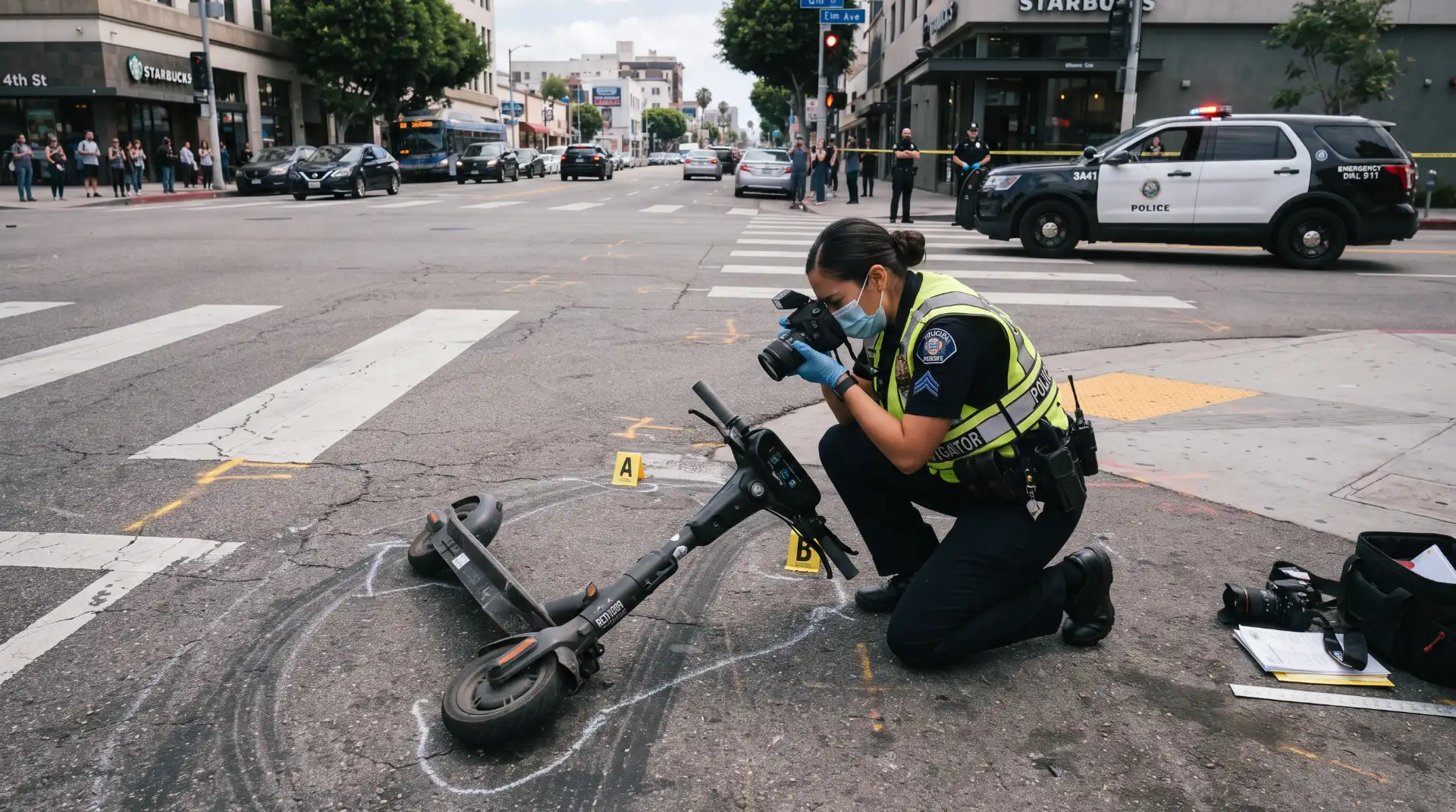
What Evidence Can Show That the Speed Limiter Failed?
Evidence can be particularly important in electronic product cases because the device may no longer display the same condition after the accident.
The scooter itself may contain valuable information. Depending on the model, relevant evidence could include the motor controller, firmware information, diagnostic records, electronic settings, app records, or other system data.
The physical condition of the scooter should also be documented.
Photographs taken after the accident may show the throttle, dashboard, controls, brakes, tires, frame, and other components. A damaged component could potentially help explain what happened, although photographs alone may not establish the precise cause of an electronic malfunction.
Video footage can also be valuable.
A security camera, traffic camera, business surveillance system, helmet camera, vehicle dashcam, or smartphone recording may capture the scooter’s movement before the crash. Video may help establish whether the scooter accelerated unexpectedly, whether the rider attempted to brake, and how other road users responded.
Witness statements can provide another source of information.
A person who saw the scooter immediately before the accident may describe how quickly it was traveling or whether the rider appeared to lose control suddenly.
Why the Scooter Should Be Preserved After a Suspected Malfunction
When a rider believes a mechanical or electronic problem caused an accident, the scooter may be important evidence.
Returning a rental scooter immediately, throwing away a damaged personal scooter, modifying its components, or allowing repairs before documentation can make later investigation more difficult.
Preservation does not necessarily mean that an injured rider should personally attempt to diagnose the scooter.
In fact, riders should avoid experimenting with a suspected malfunction after a crash because doing so could alter or destroy evidence and may create additional safety risks.
Instead, the condition of the device should be documented and preserved as appropriate while the relevant parties determine how it should be inspected.
This is particularly important when a claim may involve a manufacturer, distributor, retailer, rental company, maintenance provider, or another business.
Could a Rental Scooter Company Be Responsible?
Shared electric scooters create a different liability scenario because the rider may not own the device.
Rental companies generally control substantial portions of their fleets. Depending on the business model, they may be responsible for software configuration, maintenance, inspections, fleet monitoring, repairs, recalls, and removal of unsafe devices.
If a rental scooter’s speed limiter malfunctions, investigators may examine whether the company knew or should have known about the problem.
For example, suppose multiple riders report that certain scooters are accelerating beyond their expected limits. If the company receives repeated reports but continues placing those devices into service without appropriate inspection or repair, those facts could become relevant to a negligence or product-related claim depending on the circumstances.
The rental company’s role does not automatically establish liability.
The investigation would still need to determine what happened, whether the company had a legal duty applicable to the circumstances, whether that duty was breached, and whether the alleged conduct contributed to the injury.
Fleet Software Can Become Important Evidence
Shared scooters are increasingly managed through digital systems.
A rental company may have information about when a scooter was unlocked, where it traveled, how long it was used, and when the ride ended. Depending on the company’s technology, there may also be information concerning device status, maintenance alerts, software configuration, or other operational data.
This information could become important if the rider claims that the scooter did not operate normally.
Suppose a rider reports that a scooter suddenly accelerated on a downtown street. The rental company’s records could potentially show which scooter was used, when the trip began, and what information was associated with that device.
The precise records available will depend on the company and technology involved.
A legal investigation may therefore need to identify the relevant rental company quickly and determine what records may exist.
Could a Software Update Cause a Speed Limiter Problem?
Modern e-scooters can rely heavily on software.
A software update can change how a scooter’s electronic systems behave. That does not mean that every update creates a safety problem, but software can become relevant when a malfunction appears shortly after a change in firmware or configuration.
A technical investigation may consider which software version was installed at the time of the crash.
It may also examine whether the scooter was configured for the correct geographic market or operating environment.
Shared fleets can create additional complexity because companies may remotely change settings across large numbers of devices.
If a problem affects multiple scooters, records concerning software deployment, testing, complaints, and corrective actions may become relevant.
What if the Speed Limiter Was Accidentally Disabled?
Another important distinction is between a true system failure and a modification or user-caused change.
A rider may intentionally modify an electric scooter to increase its speed. Someone else may install aftermarket components. A previous owner may have altered the controller or software before selling the scooter.
These circumstances can significantly affect a liability investigation.
If the scooter was modified after leaving the manufacturer, the manufacturer may argue that the modification caused or contributed to the accident.
The specific legal effect depends on the facts and applicable state law.
For this reason, investigators may want to know whether the scooter remained in its original configuration, whether aftermarket components were installed, and whether software or hardware settings had been changed.
What if the Rider Did Not Know About the Failure?
A rider’s lack of knowledge can be an important factual consideration.
If a person rents a scooter through an app and has no reason to believe the device has a malfunctioning speed-control system, the rider may reasonably expect the scooter to operate within the advertised or configured parameters.
That does not automatically establish that another party is liable.
However, it may matter when evaluating whether the rider could reasonably have anticipated the dangerous condition.
The investigation may therefore examine what the rider was told, what warnings were displayed, what the rental agreement stated, whether the scooter displayed a fault message, and whether there were prior signs of a problem.
Does a Speeding Rider Automatically Lose a Claim?
Not necessarily.
An opposing party may argue that the rider was traveling too fast, violating a local speed rule, or otherwise operating the scooter improperly.
Those facts may be relevant to comparative negligence or other defenses depending on state law.
However, an alleged speed violation does not necessarily answer the separate question of whether a defective speed-control system contributed to the accident.
Imagine that a scooter was designed to maintain a maximum speed but unexpectedly accelerated because of a malfunction. The rider may have been traveling faster than expected at the moment of impact because the device was not responding normally.
Determining responsibility would require examining the evidence rather than simply looking at the speed at the instant of the crash.
The rider’s conduct, the scooter’s condition, the road environment, and the conduct of other parties may all need to be considered.
How Comparative Fault May Affect a Claim
Many U.S. states have laws addressing comparative fault when multiple parties contribute to an injury.
The exact rules differ.
In a speed-limiter case, several parties could potentially be investigated. The manufacturer may be accused of producing a defective device. A rental company may have failed to remove a problematic scooter from service. A maintenance provider may have improperly repaired the device. A rider may have been distracted or traveling in an unsafe manner. A motorist may also have contributed to the collision.
The final allocation of responsibility depends on the law governing the case and the evidence available.
This is one reason speed-limiter accidents should not automatically be treated as simple defective-product claims.
What If Another Vehicle Hits the Scooter?
A speed-control malfunction can occur during a collision involving another vehicle.
For example, a scooter might unexpectedly accelerate as the rider approaches an intersection. The rider enters the path of a vehicle, and the vehicle strikes the scooter.
The motorist’s conduct still needs to be examined.
If the driver was speeding, distracted, failed to yield, or otherwise violated traffic laws, the driver’s actions may have contributed to the accident even if the scooter had a mechanical or electronic problem.
Conversely, the motorist may have been traveling lawfully and had no reasonable opportunity to avoid a scooter that unexpectedly entered the lane.
In these cases, accident reconstruction and other evidence may become particularly important.
For another type of scooter collision involving commercial drivers, your readers can also review the site’s existing article on Delivery Driver vs. Scooter Accident Claims.
Speed Limiters and Local Scooter Laws
Speed regulations for electric scooters are not identical throughout the United States.
States, counties, cities, transportation agencies, and other authorities may establish different rules concerning scooter operation. Rental programs can also have additional requirements through local permits.
California provides one example of why local and state rules matter. Your existing article, Understanding California’s Scooter Laws, explains several California requirements involving electric scooter operation.
A speed-limiter accident should therefore be evaluated under the law applicable to the location where the accident occurred.
A rule in Los Angeles may not be identical to a rule in another city or state.
This geographic issue can become especially important when determining whether a scooter was configured appropriately for a particular jurisdiction.
What if the Scooter Exceeded the Legal Speed Because of a Defect?
Suppose a city has established a maximum speed for e-scooters and a rental scooter unexpectedly exceeds that limit because of an electronic malfunction.
The fact that the scooter exceeded the legal limit does not necessarily resolve who is responsible.
The central questions may include why the scooter exceeded the limit, whether the rider knew about the problem, whether the rental company or manufacturer knew about it, whether the device had been properly inspected, and whether the malfunction contributed to the injury.
A legal investigation may also examine whether the scooter was configured for the correct local operating requirements.
The distinction between intentional speeding and unintended acceleration can therefore be significant.
The Difference Between a Speed-Limiter Failure and Ordinary Speeding
These situations should not be treated as identical.
In ordinary speeding, the rider intentionally or knowingly travels faster than permitted.
In a speed-limiter failure, the allegation is that the scooter did not behave as intended and that the rider may have had limited ability to control its speed.
There can also be mixed scenarios.
A rider may already be traveling faster than permitted when the scooter experiences an additional malfunction.
In that situation, both the rider’s conduct and the device’s condition may need to be examined.
This is why accident investigations should focus on evidence rather than relying solely on assumptions about speed.
Could a Maintenance Company Be Responsible?
Not every scooter problem originates with the manufacturer.
Rental companies frequently use maintenance personnel or third-party contractors to inspect and repair their fleets.
If a maintenance provider incorrectly repairs a controller, alters the software configuration, installs an inappropriate component, or returns an unsafe scooter to service, questions may arise about the maintenance process.
The relevant records could include work orders, inspection checklists, repair histories, technician notes, replacement-part information, and communications regarding the device.
A recurring defect may also raise questions about whether the maintenance company or rental operator followed appropriate procedures.
The exact legal theory will depend on the facts and state law.
Product Recalls and Speed-Control Problems
Product recalls can become important evidence when a scooter manufacturer identifies a safety defect.
The CPSC maintains a micromobility information center containing safety information and e-scooter recalls. Its current resources include recalls involving electric scooters because of fall and injury hazards.
The existence of a recall does not automatically establish liability in every accident.
However, if a particular scooter model was subject to a relevant safety action, investigators may need to determine whether the scooter involved in the crash was included and whether the required corrective action was completed.
Riders should therefore preserve information identifying the scooter model and serial number whenever possible.
What About Safety Certification?
Safety certification can also become relevant when evaluating an electric scooter.
UL Solutions provides evaluation and certification services for personal e-mobility devices, including e-scooters, and identifies UL 2272 as a standard covering electrical systems in personal e-mobility devices.
UL Solutions also issued a 2026 notice warning about certain electric scooters carrying unauthorized UL certification marks. According to the notice, the identified products had not been evaluated by UL Solutions to the appropriate safety standards.
Certification status alone does not determine whether a particular speed limiter failed or whether a manufacturer is legally responsible for an accident.
Nevertheless, safety documentation, certification records, product specifications, and regulatory compliance may become relevant evidence in a product investigation.
What Should an Injured Rider Do After a Suspected Speed-Limiter Failure?
The first concern after a crash should be medical safety.
A rider who suffers significant pain, bleeding, loss of consciousness, dizziness, confusion, suspected fractures, or other serious symptoms should seek appropriate medical attention.
Once immediate medical concerns are addressed, documenting the circumstances can help preserve important evidence.
The rider should record what they remember about the scooter’s behavior before the crash. If the scooter suddenly accelerated, failed to slow down, or responded differently from normal, those details should be documented while they are still fresh.
Photographs of the scooter and crash scene can also be useful.
If another vehicle, pedestrian, or property condition was involved, those circumstances should be documented as well.
Readers can also review the site’s existing What to Do When Your E-Scooter Brakes Fail article for additional information about documenting and responding to scooter control problems.
Preserve the Rental App Information
For a rented scooter, the smartphone app may contain important information about the trip.
Riders should preserve screenshots, receipts, trip information, scooter identification details, customer-service communications, and any warning messages that appeared before or after the accident.
If the app displayed a malfunction warning, that information could become relevant.
Likewise, if the rental company sent a message concerning a maintenance problem or removed the scooter from service after the crash, those communications may be significant.
The goal is to preserve the information that identifies the device and establishes what happened before and after the accident.
Do Not Assume the Insurance Company Will Determine the Cause
Insurance companies investigate claims, but an insurance investigation is not necessarily the same as an independent product investigation.
An insurer may focus on questions concerning coverage, liability, damages, and the available policy limits.
A product investigation may require technical analysis of the scooter itself.
These are different questions.
If the accident involves a rental scooter, automobile, manufacturer, or several potentially responsible parties, multiple insurance policies may also become involved.
The site already provides broader information about scooter accident insurance issues, but a speed-limiter case may require a more specific investigation because the alleged defect can affect the identity of the responsible party.
Potential Compensation After a Speed-Limiter Accident
When a speed-limiter malfunction contributes to an injury, potential damages depend on the facts and applicable state law.
Medical expenses may include emergency treatment, hospital care, diagnostic testing, medication, surgery, rehabilitation, physical therapy, and other necessary treatment.
Lost income may also be relevant when an injury prevents a person from working.
If an injury affects a person’s ability to perform their occupation in the future, future earning capacity may become part of the damages analysis where allowed by law.
Other potential damages can include physical pain, emotional distress, loss of normal activities, and other legally recognized losses.
Property damage may also be relevant if the scooter, bicycle, phone, clothing, or other personal property was damaged.
The amount and availability of any particular category of damages depends on state law and the facts of the individual case.
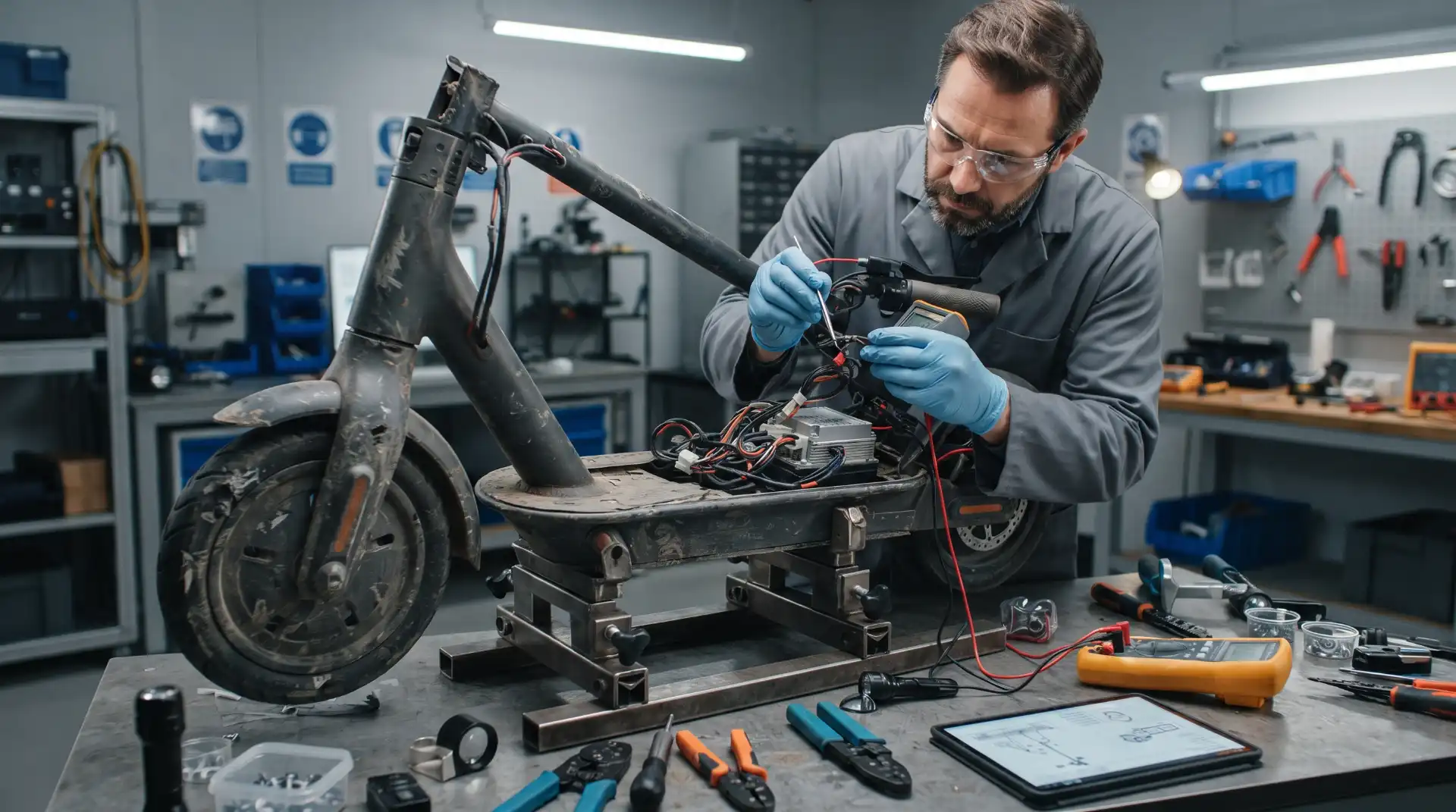
Why Expert Evidence May Matter
Speed-limiter cases can involve technical questions that are difficult to answer through photographs or witness statements alone.
An engineer or other qualified expert may need to examine the scooter’s electronic and mechanical systems.
The investigation could involve the motor controller, firmware, throttle, battery-management system, wiring, sensors, brakes, tires, and other components depending on the reported malfunction.
An expert may also compare the scooter’s condition with the manufacturer’s specifications.
Accident reconstruction may become relevant when another vehicle or pedestrian was involved.
The purpose of expert evidence is generally to help establish technical facts that cannot be reliably determined through ordinary observation.
A Speed-Limiter Case Can Involve Multiple Responsible Parties
One of the most important points for injured riders is that the first obvious party may not be the only potentially responsible party.
A manufacturer may have supplied a defective component.
A distributor or retailer may have placed the product into the marketplace.
A rental company may have failed to inspect or remove a problematic scooter.
A maintenance contractor may have performed an improper repair.
A software provider or technology system may potentially become relevant depending on the specific product and contractual relationships.
A motorist may have contributed to the collision.
The rider may also have engaged in conduct that becomes part of a comparative-fault analysis.
Determining how these factors interact requires a case-specific investigation.
Why Early Investigation Can Matter
Electronic and physical evidence can become harder to recover over time.
Rental companies may have data-retention policies.
Security cameras may automatically overwrite recordings.
Scooters may be returned to service or dismantled.
Software configurations may change.
A damaged device may be repaired or discarded.
Witnesses may also forget important details.
For these reasons, documenting the accident and identifying potentially relevant evidence promptly can be important in a suspected speed-limiter case.
Three Common Speed-Limiter Scenarios
A useful way to understand these cases is to consider three different examples.
Scenario One: A Rental Scooter Suddenly Accelerates
A rider unlocks a rental scooter and begins traveling through a city. The scooter appears to operate normally before suddenly accelerating beyond the expected speed. The rider attempts to slow down but loses control and crashes.
An investigation could examine the scooter’s electronic records, maintenance history, software configuration, prior complaints, and rental-company records. The rider’s conduct and the condition of the roadway would also need to be considered.
Scenario Two: A Personal Scooter Has Been Modified
A rider purchases a personal scooter and later installs aftermarket components that increase its performance. The scooter subsequently loses control during a ride.
In this situation, the modification may become an important part of the investigation. The manufacturer could argue that the original design was altered after sale, while other parties might be investigated depending on the circumstances.
Scenario Three: A Limiter Fails During a Vehicle Collision
A rider approaches an intersection when the scooter unexpectedly accelerates. The rider enters the intersection and is struck by a vehicle.
The investigation would need to examine both the scooter and the motorist.
The driver may have had an opportunity to avoid the collision, or the vehicle may have been traveling lawfully with insufficient time to react.
The scooter’s alleged malfunction would therefore need to be analyzed together with the driver’s actions and the surrounding traffic conditions.
How Speed Limiter Evidence Can Change a Liability Investigation
A typical scooter accident investigation may focus on driver behavior, road conditions, or rider actions.
A suspected speed-limiter failure adds another layer.
The investigation may need to determine the scooter’s intended maximum speed, its actual speed, the configuration of its electronic systems, and whether anything caused those systems to behave differently.
That can turn a relatively simple accident investigation into a product and technology investigation.
This distinction is particularly important when the rider claims that the scooter itself caused the dangerous increase in speed.
Final Thoughts
E-scooter speed limiters are designed to control how fast these compact vehicles can travel, but electronic systems can malfunction, be improperly configured, be modified, or fail to operate as intended. When an unexpected increase in speed contributes to a crash, determining responsibility can be much more complicated than simply asking whether the rider was traveling too fast.
Potentially relevant parties may include the scooter manufacturer, rental company, maintenance provider, distributor, retailer, software or technology provider, another motorist, or the rider. The specific parties involved will depend on the cause of the malfunction and the facts surrounding the accident.
Evidence can be critical. The scooter itself, electronic records, software information, maintenance history, rental-app data, photographs, video footage, witness statements, police reports, medical records, and product documentation may all help establish what happened.
The CPSC’s current micromobility resources emphasize following local laws, observing speed limits, inspecting scooters before use, and paying attention to components such as brakes, throttles, tires, handlebars, and frames. These precautions do not eliminate every risk, but they illustrate why the condition and operation of an e-scooter can matter when investigating an accident.
For riders injured after a suspected speed-limiter failure, the key legal question is ultimately fact-specific: Was the accident caused or contributed to by a defective product, inadequate maintenance, improper configuration, another person’s negligence, rider conduct, or some combination of these factors?
Answering that question may require preserving the scooter, identifying the exact device and software configuration, obtaining relevant records, documenting the accident scene, and examining the laws that apply where the crash occurred.
As e-scooters continue to become part of transportation in cities and communities throughout the United States, speed-control technology will remain an important part of the safety and liability discussion. A scooter that unexpectedly exceeds its intended operating speed can create risks for riders, pedestrians, cyclists, and motorists, making careful investigation especially important when a serious injury occurs.