As electric scooters (e-scooters) continue to grow in popularity, more riders are opting for late-night rides. Whether it’s for a quick trip to a late-night store or to get home after a long day, riding at night comes with a unique set of challenges. The low visibility, the potential for impaired drivers, and the absence of sufficient lighting on many urban roads increase the risk of accidents. In this post, we’ll explore the night riding risks for e-scooter riders, delve into the legal issues involved, and provide safety tips to keep you safe when riding after dark.
The Rising Popularity of Night Riding
Scooters have become an integral part of urban mobility, with shared e-scooter services like Lime, Bird, and Spin providing affordable transportation options across the country. In major cities like Los Angeles, New York, and San Francisco, scooters are often available well into the night. With the increasing adoption of scooters for late-night transportation, it’s essential for riders to understand the unique risks involved in riding after dark.
While many areas provide excellent lighting and infrastructure during the day, nighttime conditions can be very different. Diminished visibility, coupled with higher levels of driver fatigue and impaired driving, makes riding at night riskier than riding during daylight hours. Whether you are using a personal scooter or one of the rental services, night riding comes with additional risks that need to be addressed.
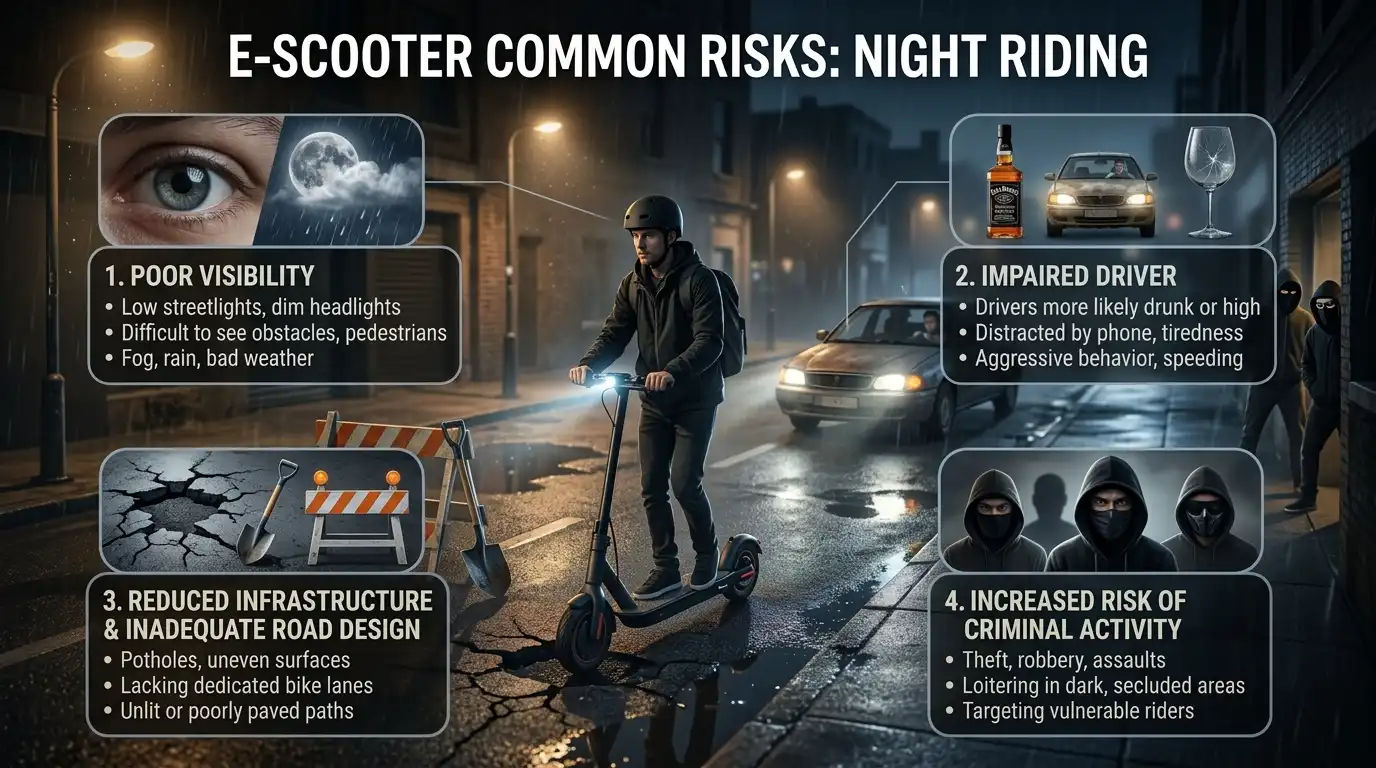
Common Risks Associated with Night Riding
1. Poor Visibility
One of the most significant risks associated with riding at night is the lack of visibility. Both riders and drivers struggle to see each other clearly under low light conditions. Riders may have difficulty spotting obstacles like potholes, debris, or pedestrians, which can lead to serious accidents. Pedestrians, too, are less likely to notice approaching scooter riders in poorly lit areas, leading to potential collisions.
Many e-scooters come with basic lights for the front and rear, but these may not be sufficient to make riders visible enough to drivers or pedestrians, especially on busy streets. Poor lighting also makes it harder for riders to spot hazardous road conditions like cracked pavement or wet surfaces.
2. Impaired Drivers
Nighttime accidents involving impaired drivers are not uncommon. With many drivers consuming alcohol or drugs at night, they are more likely to be distracted, less aware of their surroundings, and slow to react. E-scooter riders, who are often sharing the road with cars, are at a heightened risk of being involved in collisions with these impaired drivers.
In fact, research shows that drunk driving accidents increase during the night, particularly in urban areas with vibrant nightlife. Riders who are on scooters after dark may not realize the increased risk of impaired drivers, which can make the consequences of a crash even worse.
3. Reduced Infrastructure and Inadequate Road Design
Many cities still lack infrastructure that supports scooter riders during the night. Dedicated bike lanes and scooter lanes are often poorly lit or non-existent. Without clearly defined paths, scooter riders may have to share the road with vehicles, increasing their chances of being involved in a collision. Additionally, poorly maintained roads, with uneven surfaces or poorly lit pedestrian crosswalks, can be even more dangerous at night when visibility is reduced.
Inadequate parking spaces also create problems. Riders may be forced to leave scooters on the sidewalks or other areas where pedestrians could trip over them. This not only poses a risk to pedestrians but can lead to legal complications for the scooter rider.
4. Increased Risk of Criminal Activity
Another concern when riding scooters at night is the potential for criminal activity. The reduced presence of law enforcement and fewer people on the streets during late hours can lead to an increased risk of theft, assault, or harassment. Riders may also be more vulnerable if they’re distracted or unaware of their surroundings while riding in poorly lit areas.
Legal Implications of Night Riding
As an e-scooter rider, it’s important to understand the legal landscape of riding at night. Although laws vary from state to state, certain legal principles remain universal.
1. Helmet Laws and Safety Gear
In many places, wearing a helmet is required when riding an e-scooter, especially at night when the risks are heightened. California, for example, mandates helmets for riders under the age of 18 but recommends them for all riders. While helmets can’t eliminate all the risks, they significantly reduce the chances of sustaining a serious head injury in a crash.
If you are involved in an accident while not wearing a helmet, this could impact your ability to recover compensation in some jurisdictions, particularly if the crash was partially your fault. In states like California, the law could allow for comparative fault — which means your actions may affect the compensation you can recover in an injury claim.
2. Local Ordinances and Night Riding Regulations
Many cities have implemented local ordinances that affect scooter usage, including speed limits, curfew restrictions, and where scooters can be ridden at night. For example, San Francisco has set restrictions on the use of electric scooters, including the requirement that all rental scooters be off the streets by 10 p.m.
Riders should be aware of their local regulations and be mindful that they could face fines or penalties if they violate them. Always check if there are curfews or specific rules for scooter use at night in your area.
3. Legal Consequences of Accidents at Night
If you are involved in an accident while riding at night, the legal implications can be more complicated than during daylight hours. For example, if you were riding while impaired (under the influence of alcohol or drugs), you may be charged with a violation, and it could affect any claim you file against the responsible party.
In the case of accidents involving impaired drivers, the legal process may include criminal charges for the driver, as well as a civil lawsuit for damages. It’s essential to gather evidence, such as witness testimonies, photos of the accident scene, and medical reports, to support your case.
What Riders Can Do to Stay Safe at Night
1. Use Reflective Gear and Lights
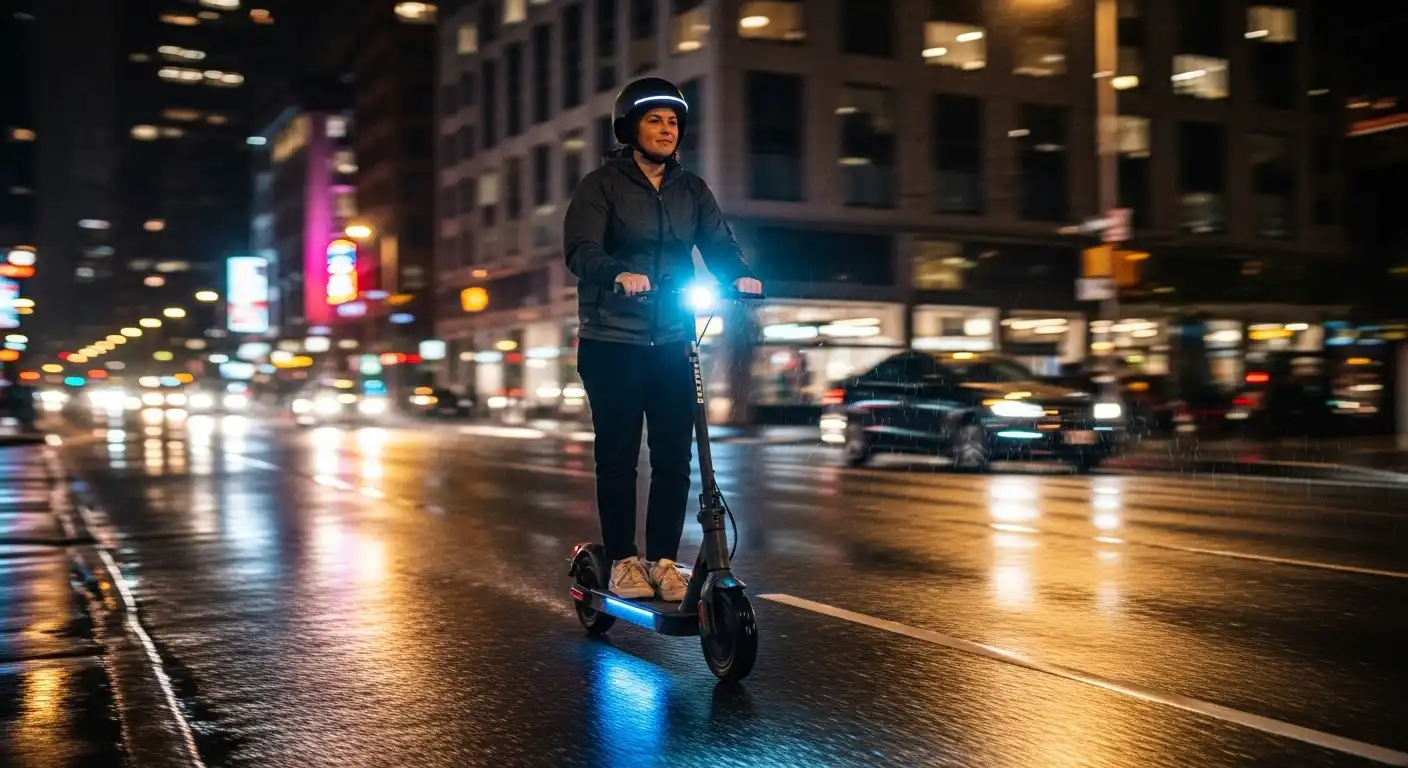
A simple way to make yourself more visible to others is to wear reflective clothing and use additional lights on your scooter. Some e-scooters come with built-in headlights and tail lights, but it’s often wise to add extra lighting to improve visibility.
A high-visibility vest, wristbands, or leg bands can be lifesavers. Reflective gear ensures that you are seen by drivers, even if you are riding in low-light conditions. Additionally, you should always ensure that your scooter’s front light is working, and if it’s not, replace it before heading out.
2. Ride in Well-Lit Areas
Whenever possible, stick to well-lit roads and paths. If you’re unsure of your route, plan ahead and make sure that you’re familiar with the areas you’ll be riding through. Avoid poorly lit alleys, unlit bike lanes, and residential streets that might have more obstacles.
3. Be Aware of Your Surroundings
Always stay alert while riding at night. Reduce distractions such as listening to loud music or texting. Be aware of pedestrians, other vehicles, and any potential hazards like potholes or debris in the road. At night, these obstacles are more difficult to see, so you must be proactive in scanning the road ahead.
4. Avoid Riding Under the Influence
Just like with any other vehicle, riding a scooter under the influence of alcohol or drugs is dangerous and illegal. In many states, DUI laws also apply to scooter riders. The legal consequences for riding impaired can include fines, jail time, or being held responsible for accidents you cause.
What to Do After a Night Riding Accident
If you are involved in an accident while riding at night, it’s important to take the following steps:
- Seek Medical Attention: Even if you don’t think you’re seriously injured, it’s important to get checked by a doctor. Some injuries, like concussions, may not show symptoms immediately.
- Report the Accident: Contact the police to file a report, especially if another party is involved. This will help with the legal process and provide an official record of the incident.
- Document the Scene: Take photos of the scene, including your scooter, any other vehicles involved, and any visible damages or injuries. Get the contact information of witnesses if possible.
- Contact an Attorney: If you’re injured or if the accident was caused by another party, contact a personal injury lawyer experienced in scooter accidents to help you navigate the legal process.
Conclusion
Riding e-scooters at night presents unique challenges that can make the experience riskier than riding during the day. Reduced visibility, impaired drivers, and poor infrastructure can increase the likelihood of accidents. However, by taking proper precautions such as wearing reflective gear, using lights, and being aware of your surroundings, you can significantly reduce these risks.
If you are involved in an accident, it’s essential to understand the legal implications and take immediate steps to protect your rights. Remember that laws can vary from state to state, and having legal representation to guide you through the aftermath of a night riding accident can make a significant difference.